
The Great Wildebeest Migration Experience In Maasai Mara And Serengeti National Park
The Great Wildebeest Migration, also known as the Gnu Migration, Serengeti Migration, and Masai Mara Migration, is a remarkable natural event that draws thousands of travelers to Kenya and Tanzania every year for a Migration safari, particularly around mid-year. It is one of the last mass terrestrial wildlife movements left on the planet and a testament to the power and unpredictability of nature.
Despite the importance of timing in the Migration, the exact movements of the wildebeest, zebras, and antelopes cannot be predicted. No one knows precisely when they will cross the Mara River or when the rain will trigger their movement to fresh grazing. This unpredictability is part of what makes the Wildebeest Migration such an exciting and compelling experience.
At our company, we have been organizing Wildebeest Migration safaris in Africa since 1998. Our expertise and knowledge of the region have helped thousands of travelers to be in the right place at the right time and at the best possible price. If you're looking for expert planning advice for a Wildebeest Migration safari, you've come to the right place. In this beginner's guide, we've compiled all our specialist tips to help you make the most of this incredible natural spectacle.
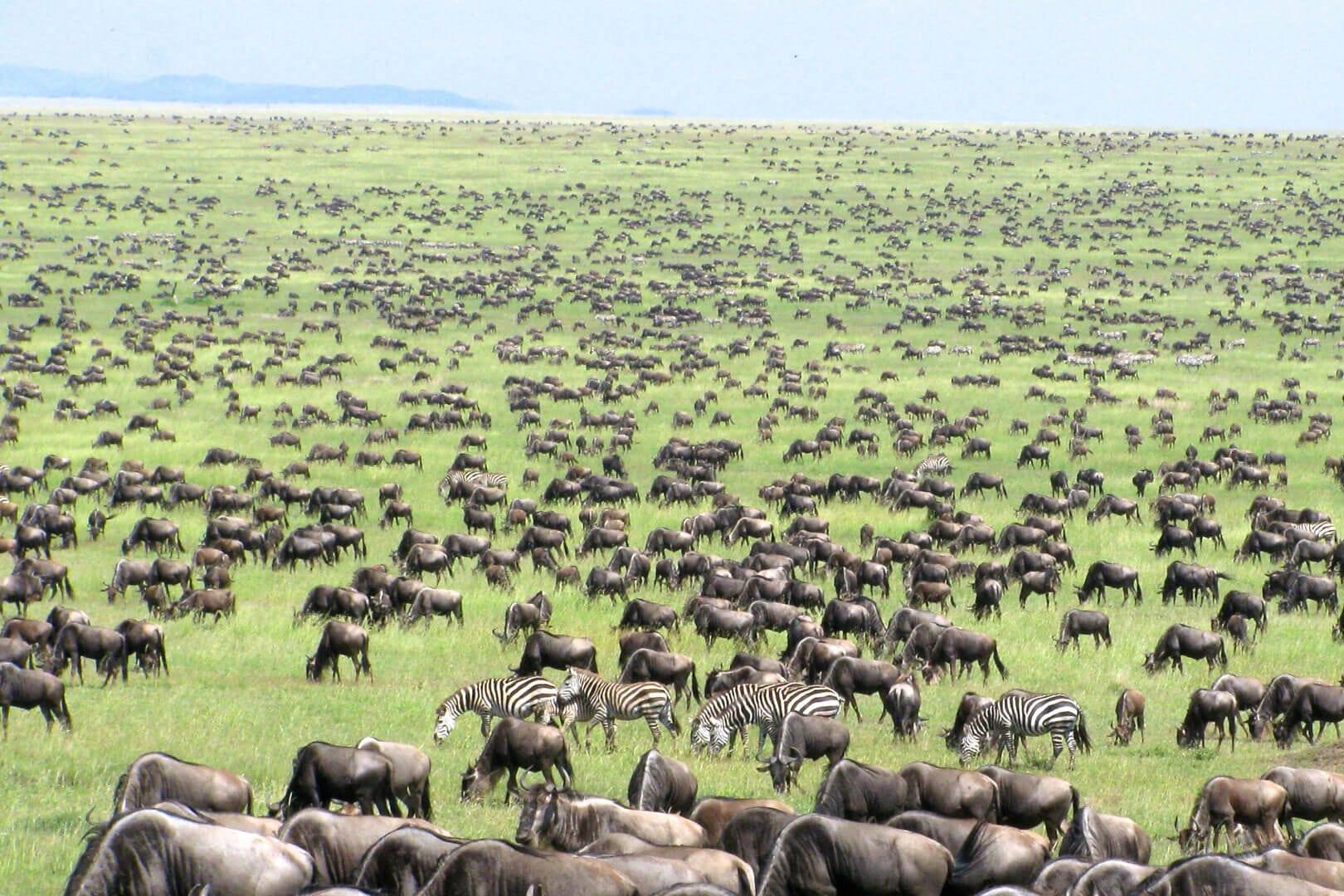
Is it possible to predict the wildebeest river crossings during the Great Migration?
Unfortunately, no. Not even the wildebeest know when they will cross. Some animals will immediately swim across the river upon arriving, while others may spend days grazing before making the crossing. Some may even turn back the way they came. While it would be ideal to predict the crossings, it's simply not possible. That's why it's important to have enough time on safari to increase your chances of witnessing this incredible spectacle.
When does the Wildebeest Migration occur?
Contrary to popular belief, the Wildebeest Migration is not limited to the months between July and October. This circular migration is a year-round movement of about two million animals across the Serengeti-Mara ecosystem. While the river crossings are a highlight and often coincide with the high season for safaris (June to October), there are equally exciting events that occur throughout the year.
Where does the Great Migration begin?
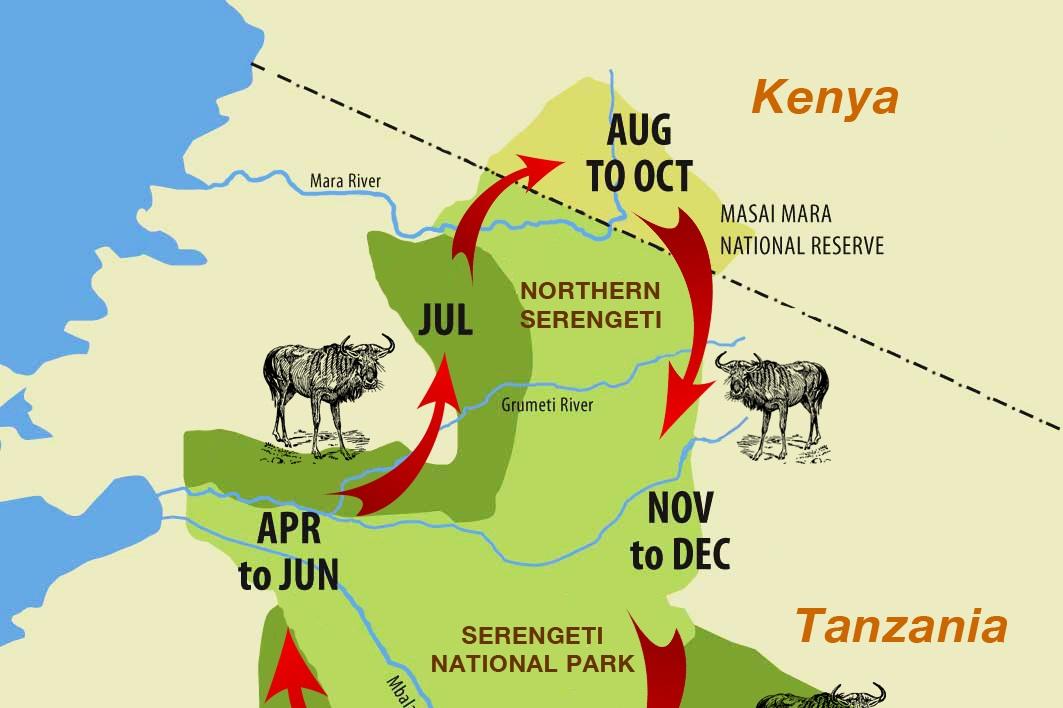
As a fluid and ever-moving movement, there is no defined start or end point for the Great Migration. Triggered by East Africa's rains, the animals follow an age-old route in search of fresh grazing and water. The wildebeest journey across the Masai Mara plains in Kenya and continue south into Tanzania's Serengeti, eventually circling up and around in a clockwise direction.
Why do Wildebeest migrate?
The Great Migration is primarily dictated by the wildebeest's response to the weather. They move in search of food to stay alive, following the growth of new grass after the rains. While some experts believe that the wildebeest are triggered by distant lightning and thunderstorms, there is no scientific proof of this.
Due to climate change, the once regular and predictable long and short rainy seasons in Tanzania and Kenya have become irregular. The timing of the rains may cause the wildebeest migration to be out of sync. Therefore, it is important to plan for a longer safari to increase the chances of witnessing the migration. Nature does not work in a way that allows for a brief visit to catch a glimpse of the spectacle.
The following is a rough guide to the whereabouts of the herds throughout the year. Keep in mind that the Serengeti Migration is triggered by rain, which can be early, late, or on time.
In January, the herds are moving south from the northeast region of Tanzania's Serengeti National Park and into the area near Lake Ndutu. The animals form mega-herds of thousands or hundreds of individuals at a time.
February to March is the calving season, with over 8,000 wildebeest babies born each day. The Serengeti's big cats are the main predators, but other animals such as hyenas and wild dogs also add to the drama.
If the short rainy season (Nov-Dec) provides good grazing, the herds feed frenziedly and remain in the southern plains until March. In April, the herds generally move northwest towards the Moru and Simba Kopjes, as the long rains begin. The rutting season, where males compete for mating rights, is in full swing.
In May, the herds start moving faster as the calves become stronger, and huge columns of up to 40 kilometers (25 miles) in length can be seen as they move towards the central Serengeti. By June, the wildebeest are in the central Serengeti, preparing for the toughest part of their journey. Some may have already crossed the Grumeti River.
In July, the herds have reached the Grumeti region and are peering at the treacherous waters of the Mara River, which they must cross to reach Kenya. The unpredictable nature of the wildebeest and the rains make it impossible to accurately predict river crossings. To increase the chances of witnessing this spectacle, it is recommended to book a Wildebeest Migration safari up to a year in advance and choose a mobile safari camp that moves with the Migration.
August is considered the best time to witness the dramatic river crossings from the northern Serengeti into the Masai Mara. The Masai Mara National Reserve is open to the public, but for a more exclusive experience, head for the private conservancies contiguous with the reserve. Note that a passport is required to cross into Kenya, but the wildebeest are exempt.

September: During this month, the herds of wildebeest start to split up into smaller groups as not all of them migrate into Kenya. While less than half of the animals remain in the northern Serengeti, the rest travel to the Masai Mara. It's still possible to spot wildebeest in the Serengeti, just not in the massive herds seen earlier in the season. However, the general recommendation for witnessing the Migration in September is the Masai Mara.
October: The Masai Mara remains the best place to view the wildebeest Migration in October, but keep in mind that this reserve is smaller than the Serengeti and can get crowded. Alternatively, the neighboring private conservancies offer less crowded viewing options while also supporting the Maasai communities. Visitors can also participate in activities such as off-road game drives, night drives, and walking safaris, which are not allowed in the national reserve.
November: In a typical year, November marks the start of the short rains, which cause the wildebeest to leave the now depleted grasslands of the Masai Mara and head back to the rejuvenated Serengeti. However, the timing of the rain can be unpredictable, and the herds can be seen around the northeastern parts of the Serengeti, where they may form smaller groups for their journey southward.
Tip: Despite Africa's reputation as a hot continent, the rain can cool down the temperatures dramatically. Early morning and late afternoon game drives are popular during this season, as the sun is weaker at these times. Visitors should bring at least one pair of trousers, closed shoes that can handle mud, and a fleece or waterproof jacket.
December: During this month, the wildebeest move south to the northern and eastern Serengeti in search of fresh grazing. This is an important period for the wildebeest as they prepare for their next journey, covering a daunting 3,000 km (1,900 mi).
Blog Post Categories
Related Blog Post Topics
Blog Posts
Related Blog Posts
Stay Inspired
Experiences to Explore in Serengeti National Park
Activities In Serengeti National Park
Luxury Safaris & Tours
Trips To Inspire with Serengeti National Park
You’re a step closer to your dream safari. Explore these tour ideas from our Africa travel experts and start planning your trip of a lifetime.
Luxury Stay
Our favourite places to stay in Serengeti National Park
Accommodation for every kind of traveler.
Let us plan your dream
African Safari
Enquire now and a Travel expert will get back to you
within 24 hours.
